
 DONATE NOW
Traditional Glaucoma Surgery: When Medications and Lasers Are Not Enough
Eye doctors recommend traditional incisional glaucoma surgery after medications or lasers fail. If medical therapy cannot stop optic nerve damage or vision loss, your doctor may suggest surgery. Surgeons perform different types of glaucoma procedures to lower intraocular pressure. Lowering eye pressure helps prevent further optic nerve damage and vision loss. Doctors perform glaucoma surgery in an ambulatory surgery center.
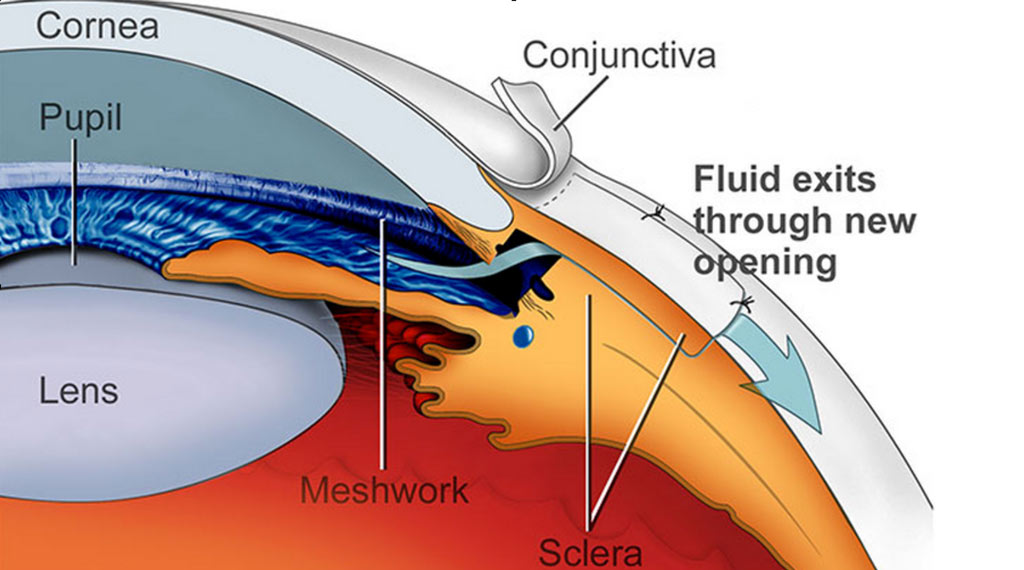
Surgical Treatment for Glaucoma
- Hydrus® Microstent is a minimally invasive FDA-approved implantable device for the treatment of open angle glaucoma. The Hydrus® is a Micro-Invasive Glaucoma Surgery (MIGS) approved to be done in conjunction with cataract surgery.
- Canaloplasty Glaucoma Surgery
- Cataract Surgery and Glaucoma
- Endocyclophotocoagulation (ECP)
- GATT (Gonioscopy-Assisted Transluminal Trabeculotomy)
- Glaucoma Drainage Implant Surgery
- Glaucoma Filtration Surgery (Trabeculectomy)
- iStent® Trabecular Micro-bypass
- Trabectome® Minimally-invasive Glaucoma Surgery
Two Goals of Incisional Glaucoma Surgery
This usually involves surgery in an operating room facility. Surgeons perform all glaucoma surgeries as day procedures in an ambulatory surgery center. During the surgery, your ophthalmologist makes tiny cuts, also known as incisions, into the outer or inner layers of the eye with a tiny knife while looking through a microscope. It involves plenty of tiny sutures to keep the tissues of your eye together. It is not uncommon to feel these sutures in the early post-operative period.
You will meet with a preoperative scheduling nurse prior to your surgery, who will provide you with detailed instructions on how to prepare yourself for your upcoming eye surgery. You will need to report at your allocated time to the surgery center. No eating or drinking anything after midnight prior to the day of your surgery. Patients can take regular pills with a limited amount of water (not juice or milk) the morning of surgery.
Accomplish in Two Ways
The goal of incisional glaucoma surgery is to improve drainage of intraocular fluid (aqueous humor). You can accomplish this in two ways:
- Improving the drainage of aqueous into its natural physiological pathway. This involves finding and working in Schlemm’s canal (Canaloplasty, Trabectome®)
- You can create a bypass channel to let fluid flow freely from inside the eye to the outer layers. The bypass lets aqueous fluid avoid the trabecular meshwork, the tiny drain impaired in glaucoma. Surgeons create the new channel using the eye’s natural tissues (Trabeculectomy, Express® glaucoma mini shunt) or a silicone tube implant (Glaucoma Drainage Implants).
Sometimes your doctor may suggest combining these surgeries with Cataract Surgery to help improve your vision. Surgeons occasionally recommend cataract surgery alone to treat your glaucoma. During cataract surgery, they always place a replacement intraocular lens (IOL) in your eye. Currently there is a choice of intraocular lens implants available and your doctor will help pick the right IOL for you based upon the measurements of your eye, your visual needs and your stage of glaucoma. The intraocular lens implants available are Multifocal lens implants, Toric lens implants and Monofocal lens implants. Feel free to discuss these lens options with your doctor or technicians during your appointment or after to see if you are a candidate for one of these implants.
Your doctor will discuss your surgical options with you and recommend the appropriate procedure at the time of your appointment. When successful, these procedures lower intraocular pressure and preserve vision.