
 DONATE NOW
Trabeculectomy Scarring: Investigating Wound Healing and Surgical Success
This project explores what drives excessive scarring after trabeculectomy, a key complication that affects surgical success. Trabeculectomy, or glaucoma filtration surgery, lowers intraocular pressure in glaucoma patients by creating an artificial drainage route from the anterior chamber to the subconjunctival space.
During surgery, surgeons make a small hole in the sclera and cover it with a thin “trap-door.” Aqueous humor then drains through this trap-door into a bleb just under the eye surface, hidden by the eyelid. However, excessive scarring can close this pathway, causing pressure to rise again.
To study this process, our lab uses primary human Tenon’s capsule and scleral fibroblast cells—the cells responsible for post-surgery scarring. We focus on a novel signaling pathway where TGF-beta 2 and TLR4 interact to regulate wound healing. We hypothesize that blocking the TGFβ2-TLR4 pathway will reduce scarring and maintain lower intraocular pressure.
Finally, we will test four inhibitors that target molecules in this pathway. We will examine their effects on cell viability, metabolism, proliferation, and migration, all crucial factors in fibrosis and wound healing.
Future Directions: The Data Generated From The Fibroblasts Cells Can Be Used To Further Test Whether Inhibition Of TGFβ2-TLR4 Signaling Molecules Can Prevent Scar Formation And Maintain The Reduced IOP After Glaucoma Filtration Surgery.
-Dr. Colleen McDowell, NTERI
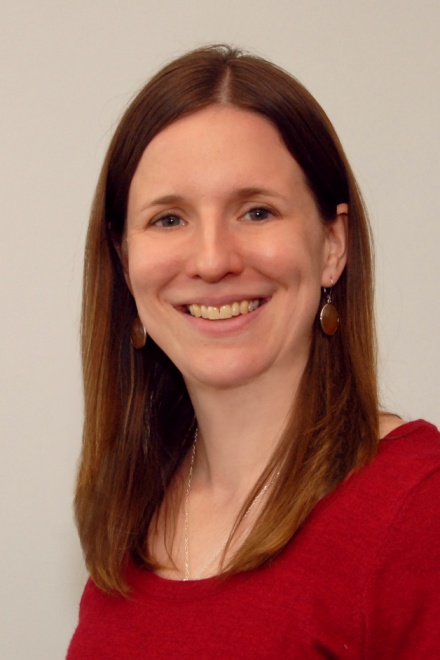
Colleen McDowell, PhD
Dr. McDowell conducted this study while she was an Assistant Professor at the North Texas Eye Research Institute (NTERI) in Forth Worth, Texas.
In March 2019 Dr. McDowell began her faculty appointment as a glaucoma researcher at the University of Wisconsin-Madison, McPherson Eye Research Institute. She is currently an Associate Professor in the Department of Ophthalmology & Visual Sciences.
3375 Medical Sciences Center
1300 University Ave
Madison, WI 53706
Phone: (608) 265-3996
Email: cmmcdowell@wisc.edu