
 DONATE NOW
Dual-Action Laser Treatment for Glaucoma
Doctors recommend Micropulse Transscleral Cyclophotocoagulation (MP-TSCPC) for many glaucoma patients. The procedure lasers the ciliary body’s secretory epithelium to reduce aqueous humor and lower intraocular pressure (IOP). In addition, there is also some evidence that MP-TSCPC helps to lower IOP by increasing aqueous outflow, potentially giving it two mechanisms of action.
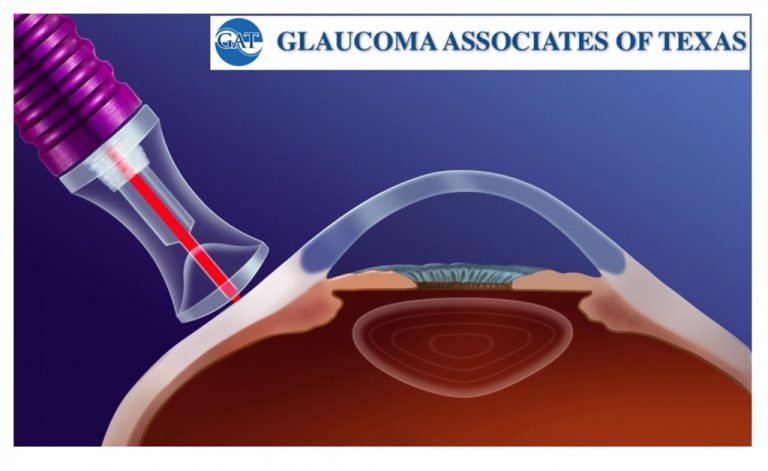
Cyclophotocoagulation (MP-TSCPC)
Why Would Your Doctor Recommend MP-TSCPC for You?
Doctors recommend micropulse transscleral cyclophotocoagulation for patients with many types of glaucoma. They use this laser for patients who do not want incisional surgery or are poor candidates for it. Doctors also use it as an additional treatment for patients with high IOP after previous incisional surgery. Micropulse transscleral cyclophotocoagulation works for patients with mild, moderate, or severe glaucoma.
MP-TSCPC is an outpatient procedure. The patient receives a peribulbar block (anesthesia around the eye) prior to the laser. The laser, performed by your ophthalmic surgeon, takes approximately 10-15 minutes and will require the use of postoperative drops to decrease inflammation in the eye. Most patients have minimal postoperative pain. Doctors may combine the procedure with an injection of the painkiller Chlorpromazine behind the eyeball.
Because doctors make no incisions in the eyeball, patients usually have no postoperative restrictions after the procedure. You will have a patch on the eye for the first 24 hours after the procedure and your doctor will want to see you the day following the procedure in the office to check your eye pressure.
Doctors may repeat MP-TSCPC if it does not achieve the desired eye pressure.
For more information, visit Micropulse Transscleral Cyclophotocoagulation.