
 DONATE NOW
What are Glaucoma Drainage Implants?
Surgeons place small glaucoma drainage implants to lower intraocular pressure and prevent further optic nerve damage. Glaucoma drainage implant surgery is an alternative to Glaucoma Filtration Surgery (Trabeculectomy). In some patients, particularly those with aphakic, neovascular, or uveitic glaucoma, aggressive healing makes trabeculectomies less successful at lowering intraocular pressure. In patients who have had previous eye surgeries, surgeons often achieve better pressure control with a glaucoma drainage device than with a trabeculectomy. The implant does not improve vision; it lowers intraocular pressure and prevents further vision loss from glaucoma. Unlike cataract implants, this device serves only to control eye pressure.
Surgical Procedure
Surgeons also use glaucoma drainage implants successfully as an initial surgical procedure for glaucoma. Various factors influence the surgery your doctor recommends. Sometimes your doctor places an implant because extensive scarring is expected in the outer layers of the eye. Compared to the channel created with trabeculectomy, the implant tube is less likely to become blocked by scar tissue.
How Do Drainage Implants Work?
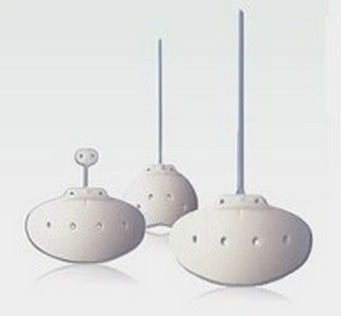
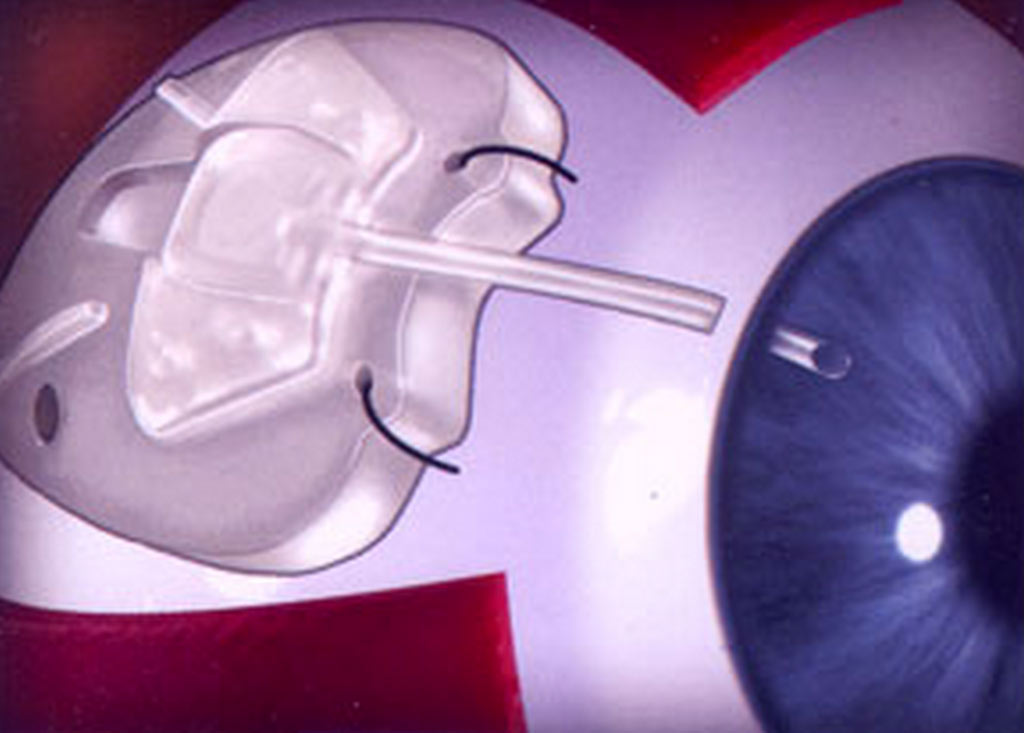
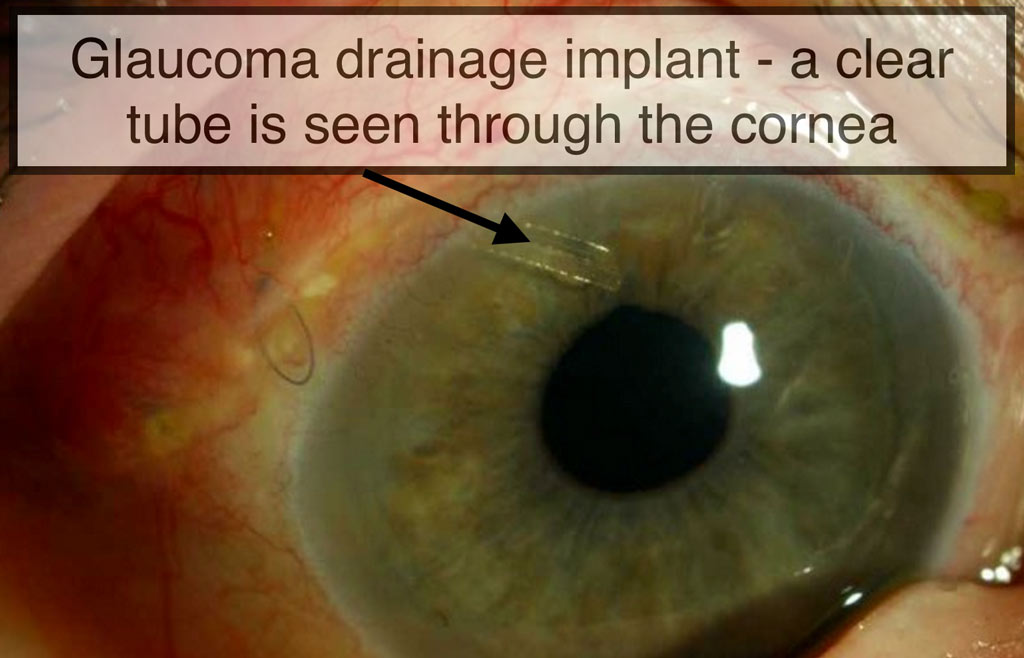
Glaucoma drainage implants come in different shapes and sizes. There are two general types of implants: Valved and Non-valved implants. All these implants have a tube and plate design. Surgeons insert a silicone tube into the front of the eye, usually between the cornea and iris, though other locations are occasionally used. The tube acts as an artificial drain, allowing fluid to flow through it to a plate placed on the eye’s surface, which serves as a reservoir.
The fluid then slowly percolates through the reservoir and the body absorbs it. Surgeons usually place the implant plate under the upper eyelid. Unless you or your family retract the lid, you will not notice it. When the upper lid is lifted, you may see a clear or white patch. This is a patch that covers the tube and prevents irritation. With all drainage implants, it can take 3 months or longer after surgery for the intraocular pressure to stabilize, as the capsule surrounding the plate of the implant needs time to mature in the eye.
What is My Chance of Success After Glaucoma Drainage Implant Surgery?
Studies have shown that the success of glaucoma drainage implants is similar to those of trabeculectomy. It should be noted that glaucoma implants are sometimes used in patients with more complicated problems, and therefore the success rate in these patients may be lower than trabeculectomy in a standard eye. However, in many patients, these implants may be the best remaining available option. In about 5-10% of cases a second tube implant is necessary to adequately control intraocular pressure. When a second tube is necessary it is usually place in the lower part of the eye under the lower eye lid.
Remember that the goal of glaucoma implant surgery is to lower intraocular pressure and preserve vision. It will not restore vision that has already been lost. By lowering eye pressure, it is hoped that the operated eye will be spared further glaucomatous damage and can maintain its vision. As with any eye surgery, there is a risk of loss of vision, though this risk is low. Sometimes your doctor will combine the tube implant surgery with cataract surgery. In these cases there may be some visual improvement from clearing of the cataract and replacing it with a clear intraocular lens implant.
What Steps Does a Surgeon Take During a Glaucoma Tube Procedure?
Choosing the Right Tube Implant
After discussing the risks, benefits, and alternatives, your doctor selects the appropriate tube implant for your eye. Once you and your doctor decide to proceed, our preoperative scheduler provides detailed instructions on preparing for surgery and arriving at the operating room. See Preoperative instructions for more information.
The Surgery
The surgery is an outpatient procedure performed in an ambulatory surgery center. In most cases, the surgery takes about one hour, though you will be at the surgery center for about 3-4 hours. The surgery is usually done under local anesthesia with intravenous sedation. An injection of local anesthetic numbs the eye completely so there is no discomfort and the eye will not move during surgery. Uncommonly, a general anesthetic is used, and the patient is put to sleep for the operation. Local anesthesia offers several advantages, including less pain post-operatively, no sore throat from the airway tube used in general anesthesia, and rapid return to normal alertness without the nausea often felt after general anesthesia. Local anesthesia also carries less risk than general anesthesia, especially for the elderly or those with health problems.
Postoperative Care
After surgery, your doctor covers the eye with a patch and protects it with a plastic shield overnight. The next morning, your ophthalmologist removes the patch and examines the eye. Then your doctor prescribes eye drops to prevent infection and reduce inflammation. It is important to take these as directed since they can make a great deal of difference in the success of the procedure. For more details, click on Postoperative instructions.
Monitoring Eye Pressure
Immediately after surgery, intraocular pressure may not be lower. Depending on the surgical approach, your doctor may continue glaucoma medications during this period. For several weeks following the surgery, your ophthalmologist will observe your eye closely and examine you frequently.
Non-Valved Implants
When surgeons use a non-valved implant, such as a Baerveldt or Molteno, the tube usually opens and drains around six weeks after surgery. When this happens, eye pressure may drop suddenly, and you may experience blurry vision, an ache around the eye, and/or light sensitivity. This is common, and if it occurs, contact our office with any questions.
Recovery and Healing
It may take several months for healing to complete and for the implant to mature in your eye. During this time, intraocular pressure and vision may fluctuate. You will be ready to change your glasses prescription approximately 2-3 months after surgery.