
 DONATE NOW
The Importance of Compliance in Glaucoma Treatment
Compliance with glaucoma treatment (ophthalmic eye drops) is essential to preserving your vision. Doctors direct glaucoma treatment at lowering eye pressure to prevent optic nerve damage and vision loss. They usually start with one or more eye drops. However, your eye doctor cannot simply prescribe these drops. You and your doctor must work together to identify the best medications for your needs. As important, you need to use the recommended eye drops!
If you do not use eye drops correctly, they cannot effectively lower eye pressure, and glaucoma can worsen. Did you know that as many as one half of all glaucoma patients fail to take their eye drops correctly? For some, this means forgetting one or more doses of an eye drop. Others may remember to take them, but do so incorrectly. In this case, you may place the eye drop incorrectly on the eye, or excessive blinking or tears may wash it out.
Taking an eye drop at the wrong time is also incorrect, and can lead to worsening of glaucoma. If you take the same eye drop too close together or too far apart, it will lose effectiveness. For example, taking one drop too soon after another can wash the first drop off the eye. Using multiple drops per eye also can cause problems. Some patients mistakenly think two or more drops work better than one. In fact, a single correctly administered drop provides the full dose, while extra drops can cause overdose and side effects.
Challenges With Glaucoma Treatment Compliance
Compliance is the act of following the recommendations of your doctor. After all, an eye drop or any other drug will not work unless you use it correctly!
Failure to comply with your doctor’s recommendation on using eye drops is not unique to glaucoma. In fact, it is widespread and occurs throughout medicine and with virtually all diseases. In fact, it is often a reason why medical treatment of a health-related problem is not successful. For several reasons, however, the glaucoma patient is particularly likely to comply poorly with their doctor’s recommendations.
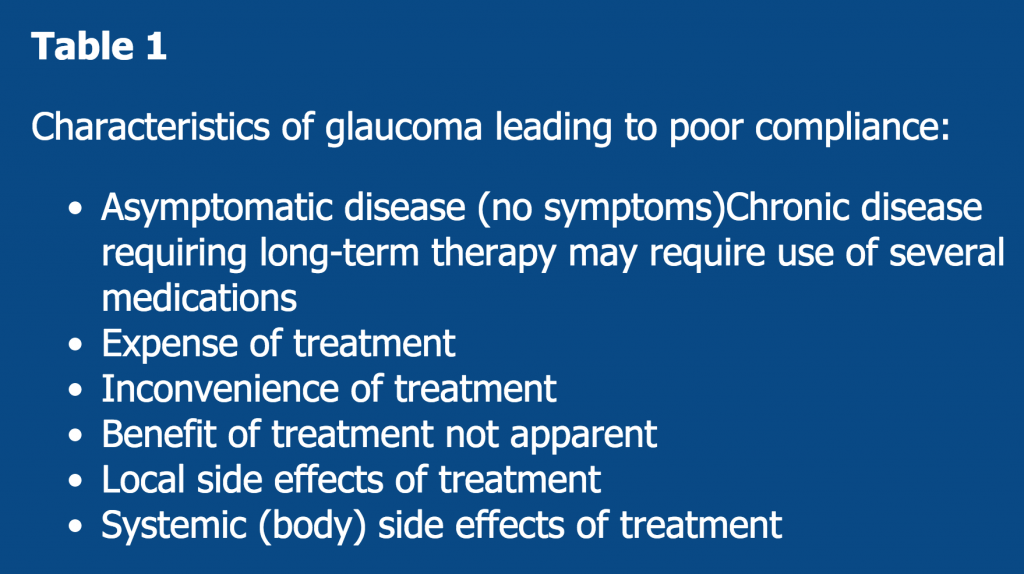
Characteristics of glaucoma leading to poor compliance include asymptomatic disease (no symptoms) Chronic disease requiring long-term therapy may require use of several medications, expense of treatment, inconvenience of treatment, benefit of treatment not apparent, and local side effects of treatment systemic (body) side effects of treatment. (Table 1)
Glaucoma is Largely Asymptomatic
An individual is often unaware that they have glaucoma until late in the course of the disease. In the most common type of chronic glaucoma, patients usually experience no pain, redness, or vision changes until the optic nerve suffers significant damage. As a result, many patients resist treatment and may even deny the need for it.
Glaucoma is Chronic and Often Requires Lifelong Treatment
The most common types of glaucoma are chronic and require lifelong treatment. After your doctor diagnoses glaucoma, you often need to use several medications for effective treatment. Use of these medications is often inconvenient and can be costly for many patients.
The Benefit of Glaucoma Treatment is Not Apparent
Treating many diseases gives patients measurable improvement. For example, a patient with an infection often notices improvement within hours after taking an antibiotic. This early improvement motivates them to continue the prescribed treatment until completion.
In contrast, glaucoma treatment aims to prevent further vision loss. Most patients cannot tell whether treatment works, and even effective treatment usually does not improve their vision.
Treatment with any drop will only lower eye pressure temporarily. Depending on the drop, the effective duration is between four and 24 hours. However, some patients only take eye drops before seeing their eye doctor. And others are only compliant using their eye drops immediately after seeing their eye doctor. Therefore, failure to use eye drops at the recommended regular intervals throughout the entire time between appointments is an important reason why glaucoma can continue to worsen in some patients.
Glaucoma Medications Have Side Effects
Each of the medications used as an eye drop to treat glaucoma has the potential for having side effects. These side effects may be serious, or they may be barely noticeable, and limited only to a treated eye, for example, and result in decreased vision, discomfort, or redness.
Some eye drops enter the bloodstream and affect heart rate, blood pressure, breathing, and even mental function. Either local side effects of the eye or general ones which affect other parts of the body can cause a patient to purposefully miss one or more doses of the eye drop. They may believe that avoiding their use as prescribed by their doctor will make them feel better.
How Patients Can Improve Compliance
Importance of Education
Educating patients about glaucoma and its treatment is the single most important way to improve compliance. Understanding that glaucoma often has no symptoms helps patients appreciate the need for consistent treatment.
Understanding Glaucoma and Eye Pressure
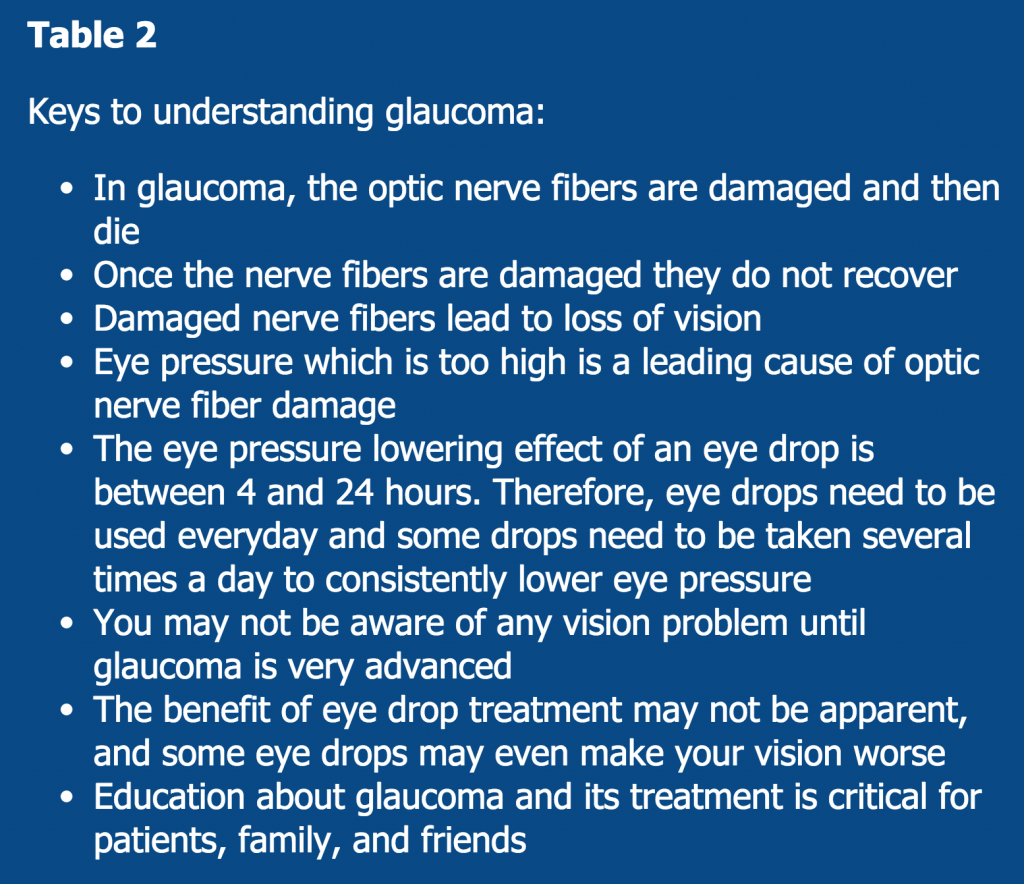
Glaucoma damages optic nerve fibers, which do not recover once harmed. Elevated eye pressure is a leading cause of this damage. Eye drops lower pressure for 4–24 hours, so daily and timely use is critical (Table 2).
Enlisting Support from Family and Friends
Friends and relatives can assist with medication adherence. Teaching them about glaucoma and proper eye drop administration improves compliance. For example, a spouse can help place a single drop correctly each time.
Reducing Side Effects
Minimizing side effects improves safe use and compliance. Different strategies may apply depending on the type of eye drop prescribed.
Proper Eye Drop Technique
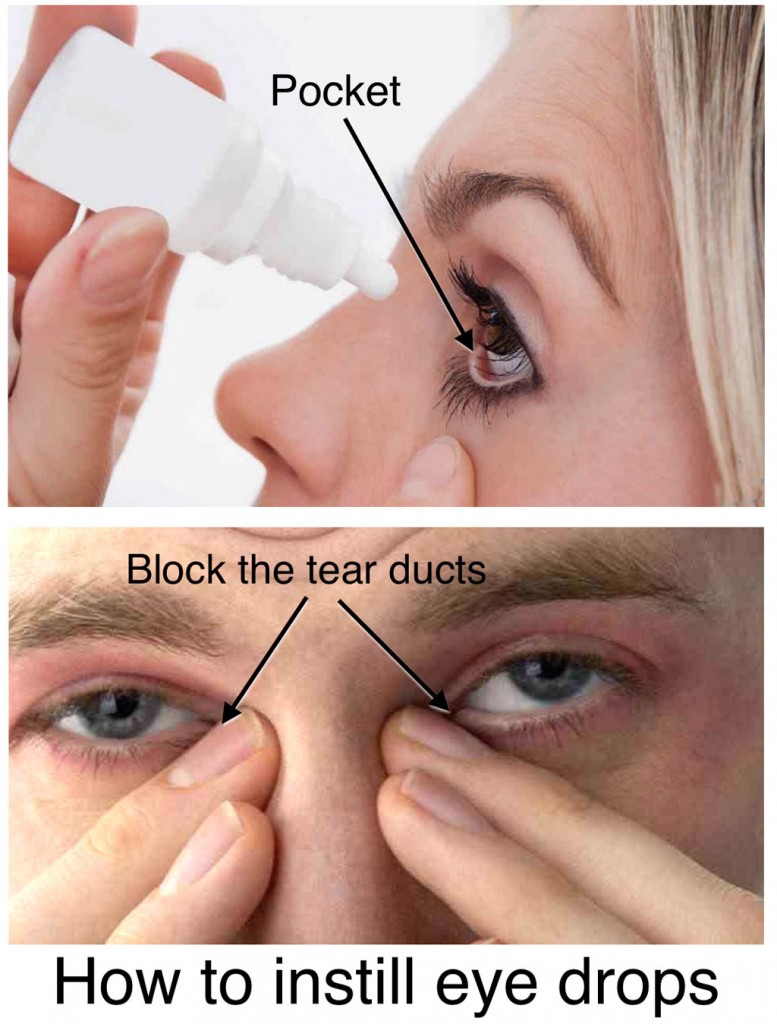
Learn to close your eyelids gently and block tear ducts for at least two minutes after administering eye drops. This increases absorption and reduces systemic side effects.
Creating a Simple Eye Drop Schedule
Scheduling drops around daily routines—such as morning, lunch, dinner, and bedtime—helps remember doses. Proper timing also reduces side effects and improves effectiveness.
Administering Multiple Eye Drops
When using more than one eye drop, wait at least five minutes between medications. This ensures proper absorption of each drop before applying the next.
Summary
Following your eye doctor’s recommendations not only increases your chances of successful treatment but also helps them evaluate whether the eye drops are effective or if you need additional ones. Ask your eye doctor about possible side effects and report any that occur. Request that your doctor observe your eye drop technique to ensure correct administration. In particular, learn to block your tear ducts after using an eye drop and do this consistently to minimize side effects throughout the body.
Discuss these issues openly with your eye doctor, as they are committed to giving you the best chance for successful glaucoma treatment.
Contact us at Glaucoma Associates of Texas to find an eye doctor (ophthalmologist) specializing in medical and surgical treatment of glaucoma.